
What Should I Do if I Find a Stray Cat in Hawaii?
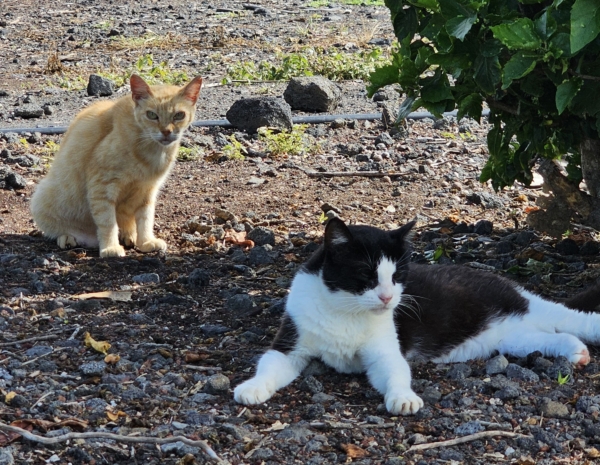
You’re walking through your neighborhood or along a quiet beach park and notice a cat lingering nearby. She looks hungry, maybe a little lost. Should you scoop her up? Call animal control? Leave her alone?
In Hawai‘i, where both pet cats and free-roaming “community cats” are common, these moments can feel confusing. The right steps depend on whether the cat is a lost family companion, a community cat, or truly feral. Taking the time to observe and act carefully helps keep cats safe, supports pet parents who may be searching, and protects Hawaii’s delicate ecosystem.
This guide walks you through how to tell the difference, what immediate steps to take, your legal responsibilities, and how to provide the safest, most effective help.
How Do I Know if the Cat Is Stray or Owned?
Not every cat you see outdoors is homeless. Some are loved companions whose pet parents allow them outdoor time, while others are strays who may have been abandoned or lost. Observing carefully before acting is the first step.
Key signs a cat may belong to someone:
- The cat has a collar, ID tag, or harness, which are obvious indicators of ownership.
- She appears well-fed, groomed, and comfortable around humans.
- She confidently approaches people or homes without fear.
Signs a cat may be stray (lost or abandoned):
- The cat is thin, dirty, or hesitant around humans but not entirely fearful.
- She roams persistently, as though searching for food.
- She does not have a collar or visible ID.
Community cats: Some cats live outdoors but are cared for by neighbors who feed them. They may look healthy and approachable but do not necessarily have a single pet parent.
Tip: A simple way to check is the “paper collar method.” Place a loose paper collar on the cat with your phone number and a note asking if she belongs to someone. If a pet parent responds, you have your answer.
How Do I Know if the Cat Is Feral?
Feral cats are born outdoors and have little to no human contact. They are not simply “shy”—they live and survive without human companionship. Knowing whether a cat is feral changes how you help.
Signs a cat may be feral:
- She avoids human contact, hides, or appears distressed when approached.
- She may show defensive or aggressive behavior, such as hissing or scratching.
- Her coat may appear rougher, and scars are common from outdoor life.
- A tipped ear (flat cut across the top) often signals she has been sterilized through a Trap-Neuter-Return (TNR) program.
Why this matters:
- Friendly cats may be reunited with pet parents.
- Feral cats are generally not adoptable but can be humanely managed through TNR programs.
Keep in mind that a frightened pet cat may behave like a feral cat at first. Observation over multiple days is the best way to know.
What Should I Do First?
Once you’ve observed the cat and determined she may need help, your next steps depend on whether she is friendly or fearful.
If the cat is approachable:
- Safely secure her indoors or in a carrier.
- Check for ID tags and have her scanned for a microchip at a vet clinic or shelter.
- Provide food, water, and a safe temporary space.
If the cat is fearful or feral:
- Do not attempt to grab or chase her.
- Use a humane trap if you need to transport her and seek guidance from a local rescue or humane society.
- Record details such as where and when you found her, along with her behavior and appearance, to help match her to a possible pet parent.
What Is a Stray Hold and Why Does It Matter?
A stray hold is the legally required holding period that gives pet parents a fair chance to reclaim their missing cat. In Hawai‘i, the rules vary by island and shelter.
In general:
- Cats without microchips are typically held for about 48 hours.
- Cats with microchips are often held longer, usually around 5 days.
Why it matters:
- If you find a cat and bring her to a shelter, the stray hold ensures her pet parent has time to search and claim her.
- If you are fostering the cat in your home, filing a “found pet” report still places her on official records, which helps reunite families.
Without a stray hold, cats could be adopted or rehomed too quickly, leaving heartbroken pet parents without a chance to find them.
What Is “Foster in Place”?
“Foster in place” means caring for a found cat temporarily in your home while you search for her family, instead of placing her in an already crowded shelter.
Benefits of fostering in place:
- It reduces stress for the cat compared to a shelter environment.
- It increases the chances of reunification since the cat remains in the same neighborhood.
- It helps shelters save space for animals in urgent need.
If you choose to foster in place, provide food, water, and safe shelter while actively posting about the found cat and filing a found pet report.
What Is the Safest and Most Effective Way to Help?
Helping a stray cat is about balancing compassion with responsible action.
For friendly cats:
- Check for ID, scan for a microchip, and post online and offline found notices.
- Use social media groups, neighborhood apps, and vet clinics to spread the word.
For feral or semi-feral cats:
- Contact local TNR programs or humane societies for support.
- Never release an unsterilized cat back outdoors, as this worsens the overpopulation crisis.
For all cats:
- Provide safe containment and transport, using humane traps if necessary.
- Act quickly to avoid the cat wandering further or becoming injured.
Well-meaning but uninformed actions—such as feeding without sterilizing or releasing kittens outdoors—can unintentionally harm cats and the community.
Where Should I Post About a Found Cat?
Spreading the word is essential. The more people who see the found cat, the higher the chance of reuniting her with her family.
Places to post:
- Local Facebook groups like “Lost and Found Pets Hawaii.”
- Nextdoor, Craigslist, and neighborhood bulletin boards.
- Veterinary offices, pet stores, and community centers.
- The Hawaiian Humane Society’s free “Found Pet Report.”
Always include clear photos, the location where the cat was found, and your contact information.
What If the Cat Needs Medical Attention?
Sometimes a found cat may be injured, sick, or malnourished.
Steps to take:
- Seek immediate veterinary care if the cat is in distress.
- Contact rescues or humane societies for emergency support if you cannot cover costs.
- Ask about financial assistance programs or special intake options for injured found animals.
What Are My Legal Responsibilities?
In Hawaii, helping a found cat comes with responsibilities. Laws vary by island, so always check your local animal control agency.
General guidelines:
- Report a found cat to animal control or the humane society within the required timeframe.
- Follow stray hold periods before rehoming or adopting.
- Never abandon or release an unsterilized cat outdoors.
- Keep documentation: photos, microchip scan results, dates, and outreach efforts.
Failure to comply may result in fines or legal action. Following the rules ensures fairness for pet parents and safety for cats.
Can I Keep or Adopt the Cat If No One Claims Her?
Yes—if the legal stray hold has passed and no pet parent comes forward, you may adopt. Many shelters offer a “first right to adopt” for people who found the cat.
Be prepared for adoption requirements: spay/neuter, vaccines, and microchipping. Document your efforts to find her family to ensure a smooth transition.
What If I Can’t Keep the Cat?
Not everyone can provide long-term care, and that’s okay.
If you cannot keep the cat:
- Contact local shelters, rescues, or TNR programs for placement help.
- Reach out to foster networks that may take her temporarily.
- Avoid abandoning the cat outdoors, as this can put her at risk and worsen community cat issues.
Final Tips and Resources
Helping a stray cat in Hawaii is about compassion, patience, and community responsibility. By observing carefully, reporting, posting widely, and following the law, you can give a cat the best chance of safety and reunion.
For more guidance:
- Hawaiian Humane Society – Lost & Found Pets
- Maui Humane Society – Community Cats Program
- DLNR Hawai‘i – Feral Cat Information
- BIISC – Abandonment Laws
- Petco Love Lost – National Lost & Found Database
References
- Hawaiian Humane Society – Lost & Found / Stray Hold Info:
https://www.hawaiianhumane.org/admissions-faq/
https://www.hawaiianhumane.org/found-report/ - Maui Humane Society – Community Cats Info:
https://www.mauihumanesociety.org/resources/community-cats/ - BIISC – Advice on Cat Overpopulation:
https://www.biisc.org/pest/feral-cats/ - Petco Love Lost:
https://lost.petcolove.org/ - Wikipedia – Feral Cat Definition & Context:
https://en.wikipedia.org/wiki/Feral_cat